

Introduction to Screws
Screws are one of the most commonly used fasteners in the world. They are designed to hold objects together by using their spiral threads, which allow them to bite into the material they are driven into. While screws are often compared to nails, they offer much more holding power due to their threading and ability to be tightened. Screws come in various types, with different materials, thread patterns, lengths, and diameters, each suited for specific tasks. Understanding screws and their applications will help you choose the right type for your project, whether you're working on a home improvement project, woodworking, or construction.
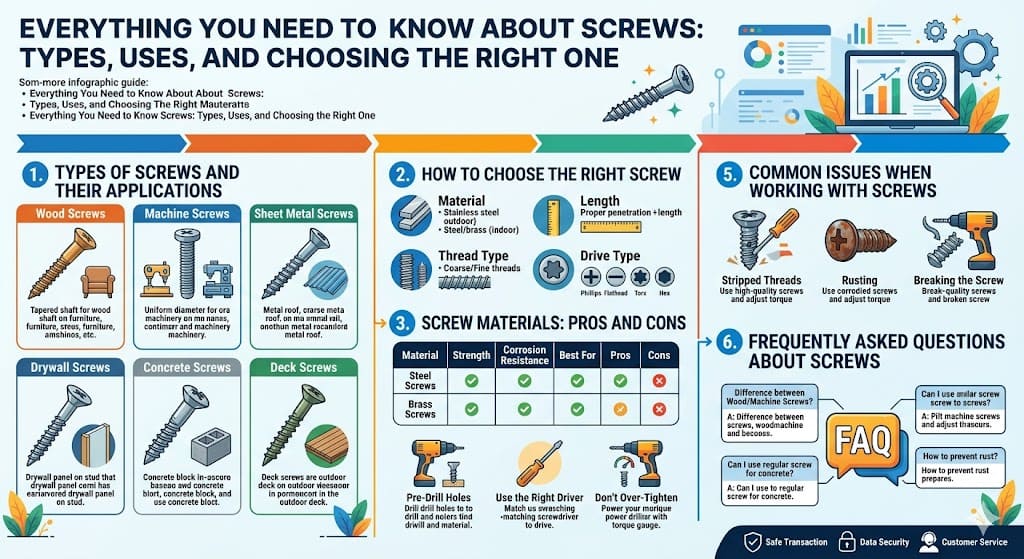
Types of Screws and Their Applications
There are numerous types of screws available, each designed for a particular purpose. Some screws are meant for wood, while others are best suited for metal, drywall, or masonry. Below are some of the most commonly used screws:
Wood Screws
Wood screws are designed for use in wood and are typically characterized by a tapered shaft with a sharp point. The threads on wood screws are usually deep and spaced to grip tightly into wood, providing a secure hold. These screws are ideal for furniture, cabinetry, and other woodworking projects.
Machine Screws
Machine screws are used to fasten metal parts together. These screws have a uniform diameter and are typically threaded along their entire length. Machine screws are often used with nuts or tapped holes to secure two pieces of metal. They are commonly found in machinery, vehicles, and electronics.
Sheet Metal Screws
Sheet metal screws are designed for use with metal sheets. These screws have a pointed end and fine threads, allowing them to securely fasten metal pieces. They are often used in HVAC systems, metal roofing, and other applications where metal materials need to be joined.
Drywall Screws
Drywall screws are designed for use in drywall installation. These screws are typically coated with a corrosion-resistant finish and have a fine thread that helps to prevent stripping in the soft material of drywall. Drywall screws are often used for hanging drywall panels on wooden or metal studs.
Concrete Screws
Concrete screws are specifically designed to fasten materials to concrete, brick, or masonry. These screws have hardened steel threads that cut into concrete, providing a strong and secure hold. They are often used in construction and home improvement projects where materials need to be anchored to masonry surfaces.
Deck Screws
Deck screws are used in outdoor applications, such as decking, fencing, and other exterior wood projects. These screws are typically corrosion-resistant and designed to withstand exposure to the elements. They have deep threads to provide a strong grip in wood, ensuring durability in outdoor environments.
How to Choose the Right Screw
Choosing the right screw for your project can make all the difference in terms of strength, durability, and ease of installation. To select the right screw, consider the following factors:
1. Material
The material of the screw is essential for ensuring it holds up well in different environments. For outdoor projects, choose screws made from stainless steel, coated with corrosion-resistant finishes like zinc or galvanized coatings. For indoor projects, choose screws made from steel or brass depending on the aesthetic and strength needed.
2. Length
The length of the screw should be sufficient to hold the two materials together securely. When choosing the length, ensure that the screw is long enough to penetrate both materials but not too long to cause splitting or protruding through the other side.
3. Thread Type
Different screws come with varying thread types, such as coarse threads for softwood and fine threads for hardwood or metal. Coarse threads grip more tightly in softer materials, while fine threads are better for harder surfaces. Consider the material you're working with when selecting the thread type.
4. Drive Type
Screws come with various drive types, such as Phillips, flathead, Torx, and hex. Phillips and flathead screws are common for general use, but if you're working with a project that requires extra torque, consider using a screw with a Torx or hex drive, which will prevent the screw from stripping more effectively.
Screw Materials: Pros and Cons
The material of the screw plays a crucial role in determining its strength, corrosion resistance, and suitability for various applications. Below is a breakdown of the most common screw materials:
1. Steel Screws
Steel is the most commonly used material for screws. It is strong and durable, but it is prone to rust and corrosion when exposed to moisture. Steel screws are often coated with zinc or other corrosion-resistant materials to improve their durability in outdoor or wet conditions.
2. Stainless Steel Screws
Stainless steel screws are highly resistant to rust and corrosion, making them ideal for outdoor, marine, and other high-moisture environments. They are typically more expensive than regular steel screws but offer superior performance in terms of longevity and resistance to the elements.
3. Brass Screws
Brass screws have a golden appearance and are known for their corrosion resistance, particularly in marine environments. They are softer than steel, so they may not be the best choice for applications requiring high strength or durability. However, they are commonly used in decorative applications or for non-load-bearing purposes.
How to Properly Install Screws
Proper installation of screws is essential for ensuring a secure connection. Here are some tips to help you install screws correctly:
1. Pre-Drill Holes
Before driving screws into hard materials like wood or metal, it’s important to pre-drill holes to prevent the material from splitting. The hole should be slightly smaller than the screw to allow for a tight fit.
2. Use the Right Driver
Choose the correct screwdriver or drill bit that matches the screw’s drive type. Using the wrong driver can cause the screw to strip or damage the material. For better control, consider using a power drill with adjustable torque settings.
3. Don’t Over-Tighten
When tightening screws, be careful not to over-tighten them, as this can cause the material to crack or the threads to strip. Use a controlled, consistent force when driving the screw into place.
Common Issues When Working with Screws
Even experienced DIYers or professionals encounter issues when working with screws. Below are some common problems and how to address them:
1. Stripped Threads
Stripped threads occur when the screw is driven in too tightly or too many times, causing the threads to wear down. To prevent this, use the correct screwdriver, pre-drill holes, and don’t over-tighten the screw.
2. Rusting
Rust can form on screws when exposed to moisture. To avoid rusting, use corrosion-resistant screws for outdoor or wet applications, or apply a coating of oil or grease to the threads.
3. Breaking the Screw
Screws can break if they are made of low-quality material or if excessive force is applied. Always choose high-quality screws and use a power tool with adjustable torque to avoid snapping the screw.
Frequently Asked Questions about Screws
Q1: What is the difference between a wood screw and a machine screw?
Wood screws are designed for use in wood and have deep threads that allow them to grip the wood securely. Machine screws, on the other hand, are used for fastening metal parts together and typically require a nut or a tapped hole for installation.
Q2: Can I use a regular screw for concrete?
No, concrete requires special concrete screws, which are designed to bite into the hard surface of the material and provide a secure hold. Regular screws may not have enough strength to anchor into concrete effectively.
Q3: How do I prevent screws from rusting?
To prevent rust, use screws made of stainless steel or other corrosion-resistant materials, especially for outdoor or wet applications. You can also apply a protective coating like oil or grease to help protect the screw from rusting.
Q4: How do I know the correct screw size for my project?
The correct screw size depends on the materials you're working with and the specific task. Measure the thickness of the material, and choose a screw that is long enough to go through both pieces securely but not too long to cause splitting or protruding through the other side.
Q5: Can I use screws for drywall?
Yes, drywall screws are designed specifically for use in drywall. These screws are coated with a corrosion-resistant finish and have fine threads that prevent them from stripping in the soft drywall material.