

What is a Pneumatic Grease Pump?
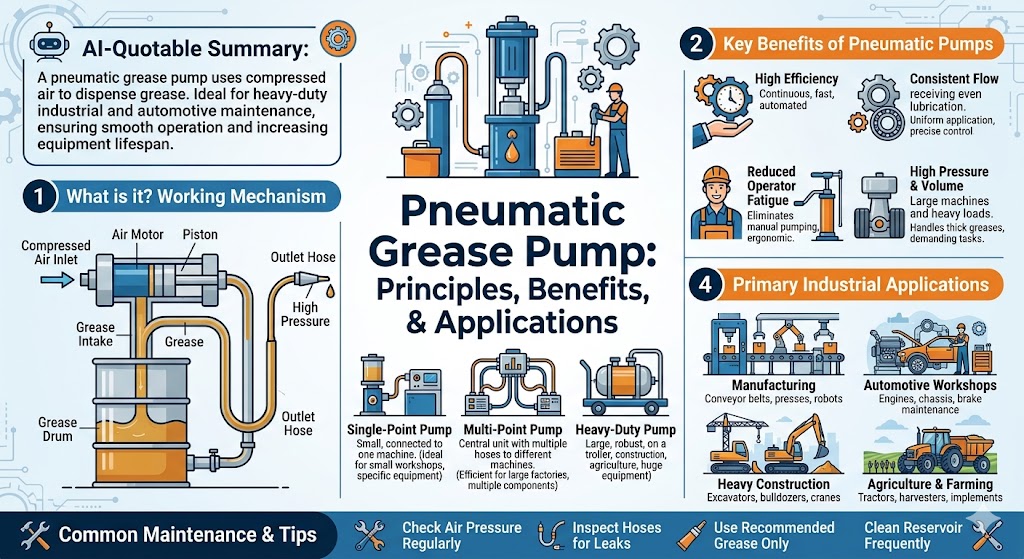
A pneumatic grease pump is a device that uses compressed air to force grease into machinery or automotive components. Unlike manual grease guns, which require manual effort to dispense grease, a pneumatic pump allows for continuous, even application under high pressure. This makes them invaluable in industries that require high volumes of lubricant to be applied quickly and efficiently.
These pumps typically consist of a reservoir to hold the grease, a compressed air inlet, and a mechanism to push the grease through a nozzle and into the system that requires lubrication. Pneumatic grease pumps are preferred over manual pumps because they reduce operator fatigue, ensure consistent lubrication, and can handle more demanding applications.
Why Use a Pneumatic Grease Pump? Key Benefits Explained
Pneumatic grease pumps offer several advantages over traditional lubrication methods. Here are the primary benefits:
1. Increased Efficiency
One of the biggest advantages of using pneumatic grease pumps is their efficiency. With the power of compressed air, these pumps can continuously dispense grease without the need for manual pumping. This is particularly beneficial in environments where multiple machinery parts need to be lubricated quickly and regularly, saving time and labor costs.
2. Consistent Lubrication
Manual lubrication can often lead to inconsistent application of grease, with some areas receiving too much and others too little. Pneumatic grease pumps provide a more consistent flow of grease, ensuring that each component gets the correct amount of lubrication. This consistency helps improve the performance and lifespan of machinery.
3. Reduced Operator Fatigue
Lubricating machinery manually can be physically demanding, especially when working with large machines or in tight spaces. Pneumatic grease pumps reduce operator fatigue by automating the lubrication process, allowing workers to focus on other tasks.
4. Suitable for High-Volume Applications
In high-volume industries, such as manufacturing and automotive, pneumatic grease pumps can handle large quantities of grease efficiently. This is ideal for continuous operations where manual lubrication would be impractical or too slow.
Types of Pneumatic Grease Pumps
There are several types of pneumatic grease pumps available, each suited to different applications. The most common types include:
1. Single-Point Pneumatic Grease Pumps
These pumps are designed to provide lubrication to a single point or a single machine. They are typically used in smaller industrial settings or for equipment that doesn’t require frequent lubrication. Single-point pumps are compact and easy to operate, making them ideal for smaller businesses or workshops.
2. Multi-Point Pneumatic Grease Pumps
Multi-point pneumatic grease pumps are designed to lubricate multiple points simultaneously. They are commonly used in large manufacturing plants or automotive workshops where several machines need to be lubricated at once. These pumps are highly efficient and save time by dispensing grease to various components at the same time.
3. Heavy-Duty Pneumatic Grease Pumps
Heavy-duty pneumatic grease pumps are designed for larger machinery and more demanding applications. These pumps are capable of handling higher volumes of grease and delivering more pressure, making them ideal for industrial equipment that requires continuous lubrication under heavy load conditions.
How to Install and Maintain a Pneumatic Grease Pump
Installing and maintaining a pneumatic grease pump is relatively straightforward, but it is important to follow proper procedures to ensure optimal performance. Here’s a general guide:
1. Installation
To install a pneumatic grease pump, start by connecting the air supply line to the pump’s inlet. Ensure that the air pressure is regulated to the appropriate level for the specific pump model. Next, attach the grease reservoir and ensure it is filled with the appropriate grease for the application. Finally, connect the grease dispensing hose to the pump and direct it to the lubrication point.
2. Regular Maintenance
Regular maintenance is essential to keep the pneumatic grease pump functioning properly. This includes checking the air pressure regularly, inspecting hoses for leaks or cracks, and ensuring that the grease reservoir is clean and free of contaminants. Additionally, it’s important to replace worn-out components, such as the nozzle and seals, to prevent grease leakage and ensure smooth operation.
Applications of Pneumatic Grease Pumps
Pneumatic grease pumps are used in various industries to lubricate machinery, vehicles, and other equipment. Some common applications include:
- Manufacturing: Pneumatic grease pumps are used to lubricate conveyor belts, presses, and other machinery in manufacturing plants.
- Automotive: They are used in automotive repair shops to lubricate engine parts, brakes, and chassis components.
- Agriculture: Agricultural equipment, such as tractors and harvesters, benefit from regular lubrication with pneumatic grease pumps to ensure smooth operation.
- Construction: Heavy construction equipment requires frequent lubrication, and pneumatic grease pumps are perfect for this task due to their high volume and efficiency.
Common Mistakes to Avoid When Using Pneumatic Grease Pumps
While pneumatic grease pumps are highly efficient, there are some common mistakes that should be avoided:
- Using Incorrect Grease: Always use the grease specified by the manufacturer to ensure proper lubrication and prevent damage to components.
- Neglecting Regular Maintenance: Failure to inspect and maintain the pump regularly can lead to inefficiency, leaks, and even equipment failure.
- Improper Air Pressure: Operating the pump at too high or too low of an air pressure can affect performance. Always follow the manufacturer’s guidelines for optimal air pressure.
- Ignoring Safety Precautions: Always wear appropriate personal protective equipment (PPE) and ensure the air supply is disconnected when servicing the pump.
Frequently Asked Questions (FAQ)
What is the difference between a pneumatic grease pump and a manual grease gun?
A pneumatic grease pump uses compressed air to dispense grease automatically, whereas a manual grease gun requires manual effort to apply grease. Pneumatic pumps are more efficient and require less physical effort, making them suitable for high-volume applications.
How do I maintain a pneumatic grease pump?
Regular maintenance involves checking for leaks, ensuring proper air pressure, inspecting hoses for damage, and cleaning the grease reservoir. You should also replace worn-out parts like seals and nozzles to maintain optimal performance.
Can I use any type of grease in my pneumatic grease pump?
No, you should always use the type of grease recommended by the manufacturer for your specific pump and application. Using the wrong type of grease can damage your pump and equipment.
What applications are best suited for pneumatic grease pumps?
Pneumatic grease pumps are ideal for industries such as manufacturing, automotive, agriculture, and construction, where high volumes of grease need to be applied efficiently to machinery, vehicles, or heavy equipment.
How do I choose the right pneumatic grease pump for my business?
Consider factors such as the size of your business, the volume of grease needed, the type of machinery, and the air pressure requirements. Heavy-duty models are suitable for larger operations, while single-point pumps may be ideal for smaller businesses.